Highlights
- We explore the eternal summer debate in the office and what the World Health Organization says about the ideal temperature for working.
- How thermal comfort affects performance (according to studies like those from Cornell University) and the health of workers.
- A review of Spain’s Royal Decree 486/1997, INSST recommendations, and the current legal limits in offices.
- Practical tips to reduce energy consumption and how Lexington implements its #WeMakeItEco commitment to create healthy and responsible workspaces.
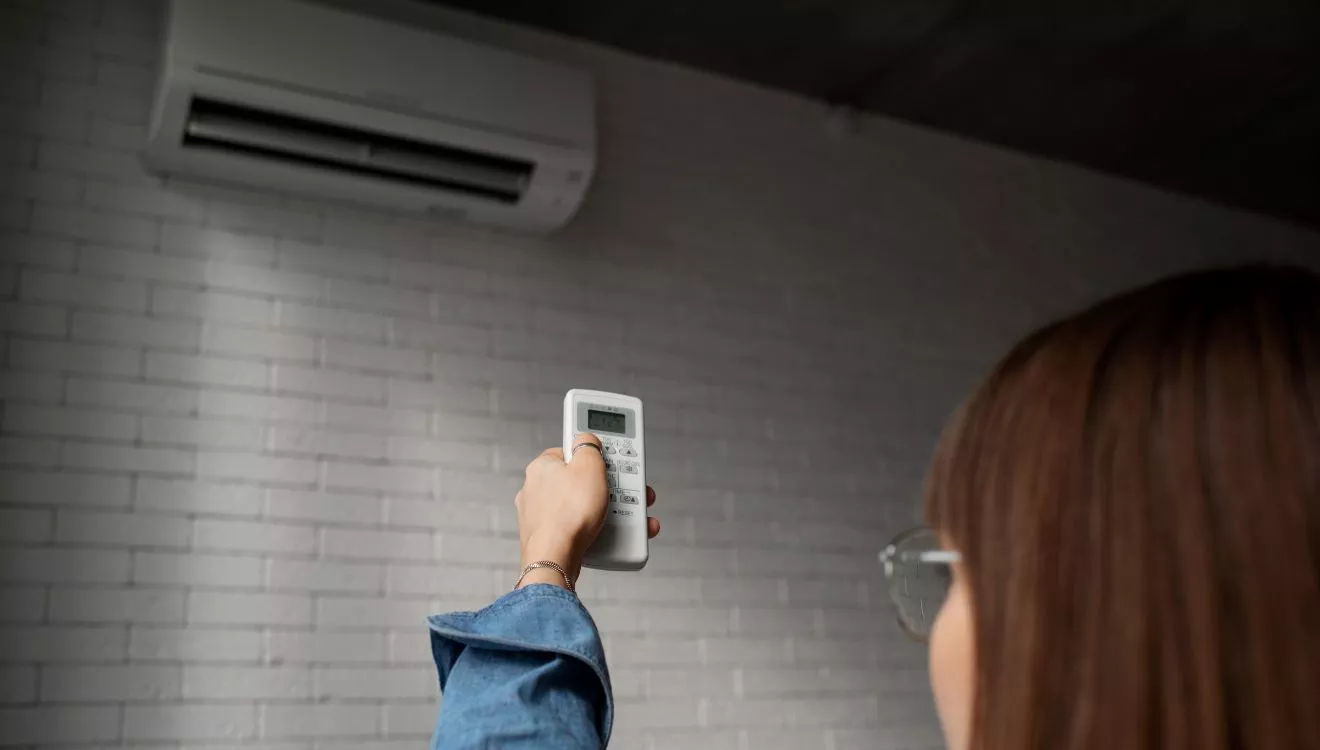
Summer heat arrives, bringing with it the eternal office debate: open window or air conditioning? You, our reader, which side are you on?
If we truly knew how to properly regulate the temperature in the office, this dilemma wouldn't exist, and moreover, we would significantly reduce energy consumption. Let's talk about it and see if you change teams!
What is the ideal temperature for working?
A question with a thousand answers! Finding the ideal temperature for everyone in the office can be a challenge, we know. The truth is, this depends on many factors, such as the type of work we do, age, gender, health status, and even mood.
What do the experts say?
The World Health Organization recommends that the ideal temperature for working in indoor spaces should range between 18 and 24 degrees Celsius. However, this is just a general recommendation, as the ideal temperature for each person can vary and we have to consider the time of year.
How to find your ideal temperature
The best way to find your ideal working temperature is to experiment. And if you don't want to catch a cold, you can also use a temperature and humidity monitor to keep track of the conditions in your workspace.
Why is it important to maintain an adequate temperature?
Maintaining an adequate temperature in the workplace is important for several reasons:
Impact on productivity
Temperature has a significant impact on worker productivity. A study conducted by Cornell University found that workers in an office with a temperature of 23°C are 15% more productive than those in an office with a temperature of 20°C.
Employee well-being and health
An adequate temperature can improve employee well-being and health. An environment that is too hot or too cold can cause fatigue, irritability, headaches, and other health issues.
Compliance with labor regulations
In Spain, there are labor regulations that set maximum and minimum temperature limits for workplaces. Compliance with these regulations is mandatory for all companies.
Regulations on Office Temperature in Spain
General Applicable Regulation
Let’s get to the theory. In Spain, office temperature regulations are governed by the Royal Decree 486/1997, on Minimum Safety and Health Provisions in Workplaces.
This Royal Decree establishes that the temperature in workplaces must be adequate and compatible with the activity carried out. Annex III of the Royal Decree sets specific environmental conditions for different types of work. Specifically, Annex III states that the recommended temperature for sedentary office work is between 17 and 27 degrees Celsius, with a relative humidity between 45% and 60%.
Extraordinary Measures of 2022 (no longer in effect)
In 2022, the Royal Decree-Law 14/2022 was approved, which established specific temperature limits in certain buildings as an energy-saving measure. Nevertheless, these measures were temporary and are no longer in effect, so regulation now reverts exclusively to the general rules set out in Royal Decree 486/1997.
INSST Recommendations
Additionally, the technical recommendations of the National Institute for Safety and Health at Work (INSST) should be taken into account, which provide guidance on optimal levels of temperature, humidity, and ventilation to ensure thermal comfort and prevent risks related to thermal stress in office environments.
The main recommendations include:
- Adjust the temperature according to the type of activity: for sedentary work, avoid extremes that may cause discomfort or fatigue.
- For light work (for example, tasks involving moderate movement, occasional handling of loads, or frequent walking within the office), the recommended temperature should be between 14 °C and 25 °C. Since these activities involve higher metabolic expenditure than purely sedentary work, the acceptable thermal range is slightly lower.
- The regulation also governs air velocity to avoid discomfort. In non-hot environments, air velocity should not exceed 0.25 m/s. In hot environments, it can reach up to 0.5 m/s. For sedentary work in non-hot environments, the limit is reduced to 0.15 m/s.
- Control relative humidity: keep it at intermediate levels (usually between 45% and 60%) to avoid environmental dryness, respiratory irritation, or microorganism proliferation.
- Ensure adequate ventilation: guarantee periodic air renewal, either through natural ventilation or well-maintained HVAC systems.
- Avoid annoying drafts: especially at fixed workstations, as they can create a perceived temperature lower than actual and cause muscle discomfort.
- Perform regular maintenance of HVAC systems: cleaning filters, inspecting ducts, and ensuring proper functioning to prevent hygiene risks and maintain efficiency.
- Adapt conditions for particularly sensitive individuals: consider situations such as pregnancy, respiratory conditions, or higher sensitivity to heat or cold.
- Allow some organizational flexibility: facilitate, when possible, clothing adaptation or small variations in the immediate environment of the workstation.
Tips to reduce energy consumption in the office
In addition to maintaining an adequate temperature in the workplace, it is also important to take measures to reduce energy consumption. Some measures that can be taken are:
- Turn off lights and electronic equipment when not in use.
- Use energy-efficient light bulbs.
- Thermally insulate the building.
- Install a temperature control system.
Lexington and its commitment to sustainability
#WeMakeItEco
Sustainability has become a crucial topic in today's business environment, and our sector has the opportunity to lead this transformation.
At Lexington, our vision is clear: we not only strive to offer flexible and exceptional workspaces, but we also understand that sustainability is the foundation on which to build environments and experiences that meet current demands. Learn more about our We #MakeItEco initiative!
What measures Do We Take in Our Offices?
- Pure Air in Your Workspace: Advanced filtration system, controlled humidity, smoke-free space, and chemical-free environment.
- Purified Water for a Greener Planet: State-of-the-art filtration, reusable bottles, Legionella controls, and water recycling for irrigation.
- Healthy Food in Our Spaces: Free fruit and vegetables each month, with social and environmental commitment. Even better, plastic-free!
- Bright and Efficient Offices: Our spaces feature smart lighting design, natural light, and LED technology for your well-being.
- Physical Health and Workplace Wellness: Move with us! Close to public transport, bike and scooter parking, resources, and activities for your health.
- Thermal Comfort in Our Locations: Intelligent climate control, solar energy, individual controls, and efficient energy use.
- Goodbye to Noise!: We control sound in every area with acoustic panels, carpets, or fabric tapestries so you can concentrate and work better.
- Eco-Friendly Spaces: VOC-free materials, recycling, eco-friendly amenities, and environmental education for a positive impact through our blog.
- We Care About Your Mental Health: Policies, programs, and spaces designed for your cognitive well-being: nature, natural light, green areas, and wellness activities.
- Lexington Community: We promote access to essential health services, conduct regular surveys, and build an inclusive and cooperative community.
In conclusion, there is no single answer to the question of what the ideal working temperature is, but we do have the ability to create a comfortable, sustainable, and productive workspace.
Are you interested in our sustainable coworking spaces? ♻️ Fill out the form, and we’ll provide you with more information! ⬇️