Highlights
- Employment continues to grow in 2026, with positive hiring forecasts.
- Technology is redefining professional profiles and key skills.
- Human Resources is taking on an increasingly strategic role.
- Workplace flexibility is becoming a key factor in attracting and retaining talent.
Current labour market and business context
Despite ongoing global economic uncertainty, the labour market remains dynamic and in constant transformation. In Spain, the most recent data confirms this trend:
📉 EIn 2025, the unemployment rate fell below 10% for the first time since 2008, with 605,400 new jobs and a total of 22.46 million people employed. (Source: Huffpost).
📈 In addition, sectors such as manufacturing, construction and services led job creation.
🌍 However, structural challenges persist, such as skills adaptation and the high level of youth unemployment.
Optimism among Spanish companies has also increased. Net hiring forecasts reach 19% for the first quarter of 2026, with 35% of companies planning to expand their workforce.
In this context, Human Resources departments face the major challenge of attracting, developing and retaining competitive talent, making workplace flexibility, continuous training and innovation in talent management essential.
New technological needs in the business environment
It is impossible to envision a future that is not technological. As a result, companies are constantly facing new tech challenges that directly impact their ability to remain relevant and efficient in the market.
Technological trends impacting businesses
What not long ago seemed impossible has now become an essential resource for progress and innovation. These are the new trends that cannot be overlooked by today’s companies:
- Artificial Intelligence (AI) integrated into the business: AI is evolving into a strategic capability, becoming embedded across business processes to improve decision-making, automate complex operations, and generate value from data.
- Hybrid and multicloud cloud infrastructures: Companies are adopting flexible and scalable cloud environments that combine on-premise and cloud resources, enabling greater operational efficiency, support for AI workloads, and regulatory compliance.
- Advanced and proactive cybersecurity: In response to the rise of increasingly sophisticated digital threats, cybersecurity is shifting toward predictive models and Zero Trust architectures, ensuring the protection of data, systems, and the trust of customers and partners.
- Intelligent process automation: The combination of artificial intelligence and RPA is driving hyperautomation, optimizing workflows, reducing errors, and freeing up resources for higher-value strategic activities.
- Technology democratization and digital upskilling: Low-code/no-code platforms and continuous training enable non-technical profiles to actively participate in innovation, accelerating the development of internal solutions.
- Integration of digital ecosystems and emerging technologies: The unification of data, systems, and tools, together with the selective adoption of technologies such as IoT, extended reality, and sustainability solutions, is key to improving efficiency and achieving a sustainable competitive advantage.
Integrating innovative technologies into business processes
Today, we have all kinds of innovative technologies that have become a must. But how do we integrate them? Don’t worry — here’s a step-by-step guide:
- Assess real business needs and define clear objectives for technology adoption.
- Select technologies aligned with your strategy and business model.
- Design a realistic roadmap with testing, training and monitoring phases.
- Promote continuous internal training and partnerships with external specialists.
- Measure results regularly and adapt solutions based on insights gained.
- Don’t hesitate to outsource to technology consultants or partners when necessary.
Training trends for HR professionals in 2026
With accelerating technological change, HR departments are renewing their training priorities:
Current training priorities
- Diversity, equality and inclusion as key pillars of organisational culture.
- People Analytics tools and advanced talent management systems (HRMS).
- Soft skills and advanced human skills: communication, critical thinking and leadership are increasingly valued.
- Continuous training (upskilling and reskilling) to avoid professional obsolescence.
Human Resources professionals and the search for benchmark companies
What isn’t visible doesn’t exist. If your company wants to go a step further, it’s likely because it follows the tangible example of successful companies in the market. HR professionals play a key role in this task, identifying and analysing reference companies in an increasingly competitive and dynamic environment.
For example, if your company operates in the technology sector, companies such as Google or Apple can serve as role models, standing out for their continuous innovation and collaborative work culture. Studying their practices and strategies can provide valuable insights into how to improve and adapt new technologies within your company.
Strategies to meet new business needs
Now that you’re familiar with current market trends, which key strategies should companies adopt to meet new business needs?
- Diversity, equity, and inclusion as key pillars of organizational culture.
- People Analytics tools and advanced talent management systems (HRMS).
- Soft skills and advanced human capabilities: communication, critical thinking, and leadership are increasingly valued competencies.
- Continuous learning (upskilling and reskilling) to prevent professional obsolescence.
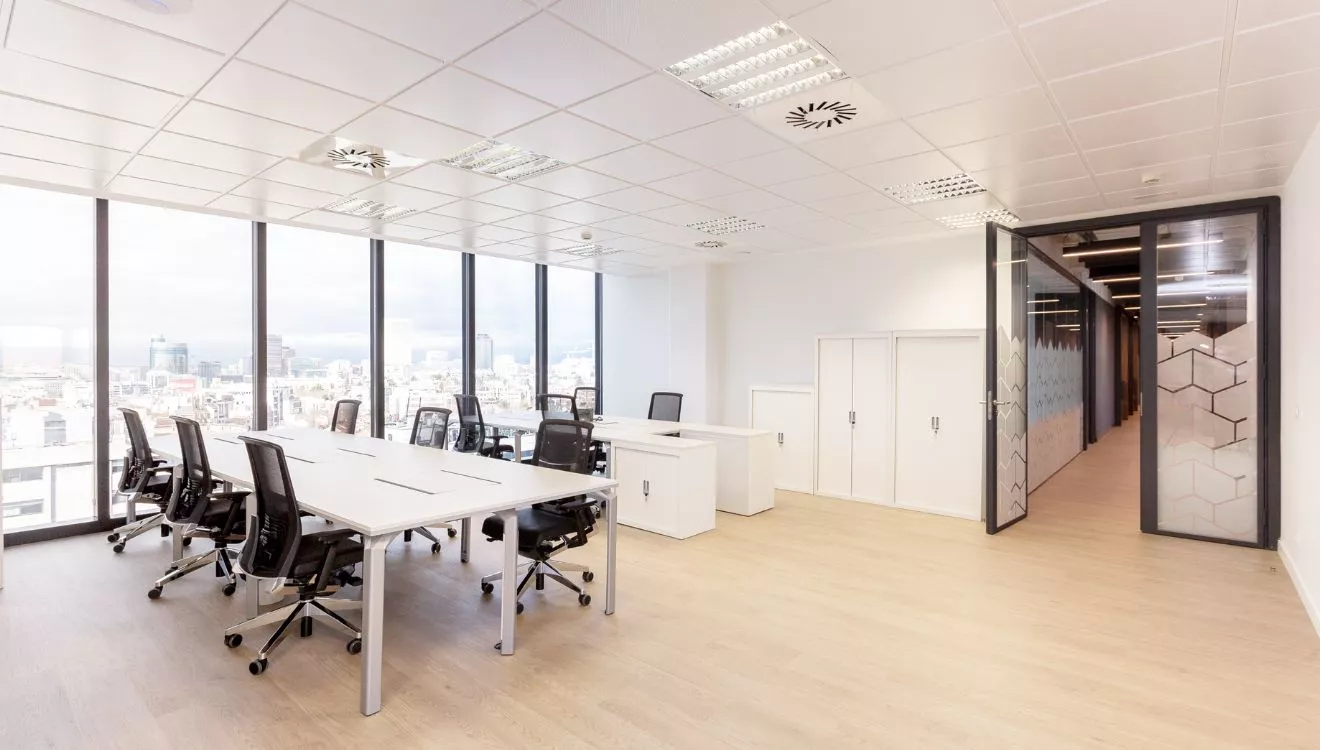
Lexington’s flexible spaces are the ideal environment to implement this work philosophy. We not only provide fully equipped and customisable offices in prime locations in Madrid and Barcelona, but also offer flexible contracts that contribute to increased workplace productivity.
In short, we continue to closely monitor the ongoing evolution of the labour market and compile the most up-to-date data to keep you informed about the latest workplace trends. In the meantime, start implementing them before new ones emerge!