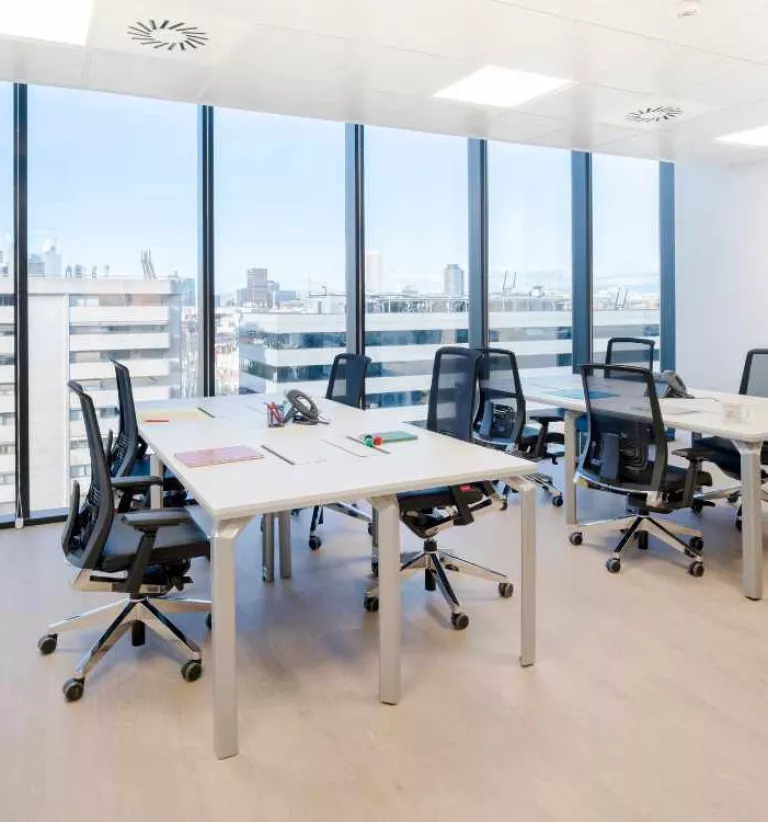
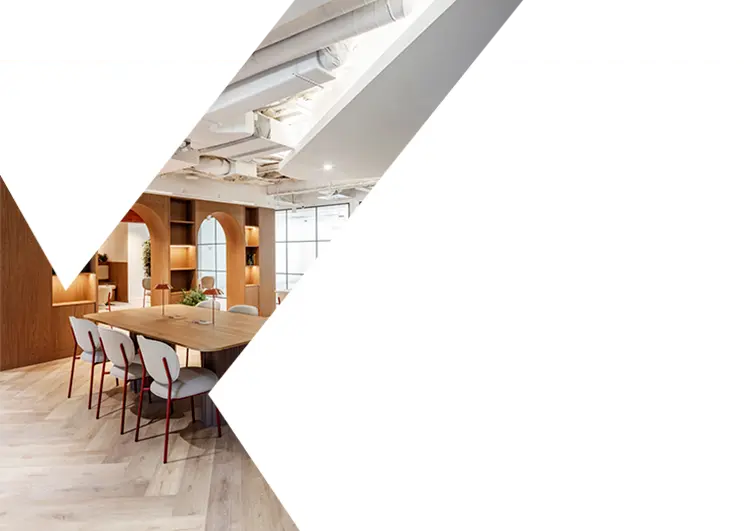
Today, in addition to traditional office leases, there are far more flexible workspace solutions that allow businesses to adapt their office space to their actual needs, avoiding high upfront investments and long-term contracts that may eventually become too small… or too large.
If you're looking for an office for the first time or planning to relocate, this guide will help you make an informed decision.
1. Define your company's actual needs
Before you start visiting offices, it's worth answering a few questions:
- How many people will regularly work from the office?
- Will your team work from the office every day, or do you follow a hybrid model?
- Do you frequently receive clients or suppliers?
- Do you need meeting rooms?
- Is it important to have access to shared areas or event spaces?
👉🏼 The clearer you are about how your team will actually use the office, the easier it will be to find a workspace that fits your day-to-day operations without paying for extra space or services you don't really need.
It's also a good time to think about the next two or three years. Your office should meet your current needs while also giving you room to grow.
2. Calculate how much office space you need
👉🏼 More space doesn't always mean a better office.
As a general guideline, conventional offices typically recommend between 8 and 12 m² per person, although this figure may vary depending on the type of business.
However, flexible workspaces make much better use of available space. By sharing common areas, reception services, meeting rooms, cafés, and collaborative spaces, businesses require fewer private square metres without sacrificing comfort.
This results in more efficient use of space and significant cost savings.
3. Set a monthly budget
When evaluating office costs, it's important to look beyond the rental price.
With a traditional office lease, you'll usually have additional expenses such as:
- Service charges.
- Utilities.
- Internet.
- Cleaning.
- Maintenance.
- Reception services.
- Furniture.
- Insurance.
- Taxes.
By contrast, in a flexible workspace, most of these services are already included in a single monthly fee, making financial planning easier and helping you avoid unexpected costs at the end of the month.
In addition, there's usually no need for a large upfront investment to fit out or furnish the office, making flexible workspaces particularly attractive for startups, SMEs, and growing businesses.
4. Choose the most strategic location
Location remains one of the most important factors when renting an office.
It not only affects your company's image but also the convenience of employees, clients, and business partners.
It's worth considering factors such as public transport connections, accessibility by car, nearby restaurants and services, the surrounding business environment, and the prestige of the area.
At Lexington, we offer corporate coworking spaces in some of the most prestigious business districts in Madrid and Barcelona, with offices fully equipped so businesses can start working from day one.
In Madrid, you'll find our workspaces in prime locations such as Paseo de la Castellana, Chamartín, the Salamanca district, and La Moraleja. In Barcelona, we're located on Avenida Diagonal—one of the city's main business avenues—as well as Passeig de Gràcia.
👉🏼 Choosing the right location not only improves your team's day-to-day experience but also projects a stronger and more professional image.
5. Compare office types and rental models
Not every business needs the same type of workspace.
Today, there are several options available:
- Traditional office.
- Private office in a business centre.
- Flexible workspaces.
- Coworking spaces.
- Virtual offices: for businesses that don't require a permanent physical presence.
👉🏼 Flexibility has become a strategic advantage, especially in an environment where business needs evolve rapidly.
6. Visit several workspaces before making a decision
Photos are helpful, but they can never replace an in-person visit.
During your visit, it's worth paying attention to aspects such as:
- Condition of the facilities.
- Natural light.
- Noise levels.
- Quality of the furniture.
- Connectivity.
- Security.
- Working environment.
👉🏼 It's also worth getting to know the team that manages the workspace. Great service can make a significant difference to your company's day-to-day experience.
7. Review what's included
Two offices with a similar price can offer very different services.
Before making a decision, review everything that's included. In flexible workspaces, many of these services are typically included in the monthly fee, allowing businesses to focus on their core activities without worrying about the day-to-day management of the office.
8. Negotiate the contract terms
Before signing any agreement, it's important to review aspects such as the contract length, minimum commitment, notice periods, the possibility of expanding your workspace, and renewal terms. Traditional lease agreements tend to be much more restrictive in these areas.
9. Plan your move into the new office
Good planning will help prevent disruptions to your business operations.
Be sure to organise the following in advance:
- Moving equipment.
- Updating your registered business and tax address.
- Updating your website and social media profiles.
- Informing clients and suppliers.
- Setting up your IT systems.
10. Consider whether the office can grow with your business
👉🏼 It's advisable to choose a workspace that allows your business to grow naturally.
If you hire new employees, need additional private offices or more meeting rooms, having a flexible workspace provider makes the transition much easier without having to relocate your business entirely.
Frequently asked questions about renting an office
How much does it cost to rent an office in Spain?
It depends on the city, location, office size, and the services included. Flexible offices usually combine rent, utilities, and professional services into a single monthly fee, making it easier to manage your budget.
What additional costs can an office have?
With a traditional office lease, it's common to pay separately for service charges, utilities, internet, cleaning, maintenance, insurance, and furniture. That's why it's important to compare the total cost, not just the monthly rent.
Is a traditional office or a flexible office better?
A traditional office may be suitable for long-term, stable projects. Flexible offices stand out thanks to their lower upfront investment, all-inclusive services, and ability to adapt as your business grows.
Where should I rent an office in Madrid?
Highly sought-after business areas include Paseo de la Castellana, Chamartín, the Salamanca district, and northern Madrid business hubs such as La Moraleja, all valued for their excellent transport links and strong business environment.
Where should I rent an office in Barcelona?
Passeig de Gràcia and Avenida Diagonal are among the most desirable locations for both national and international companies thanks to their excellent connectivity and wide range of nearby services.
Find your ideal office with Lexington's flexible workspace solutions
Every business works differently. That's why the ideal office isn't necessarily the largest or the most impressive—it's the one that best fits your company's real needs.
At Lexington, we offer fully equipped private offices, meeting rooms, virtual offices, and flexible workspace solutions designed to help businesses, startups, and large companies focus on what matters most: growing their business.
Our coworking spaces in Madrid and Barcelona combine prime locations, professional services, and flexible agreements that allow businesses to adapt as they grow—without the limitations of a traditional office lease.
Request more information by completing the form below!